
SUNCREST / HOME ENERGY
Solar starts with your home.
A useful system begins with the roof above you and the electricity you actually use, not a one-size-fits-all promise.
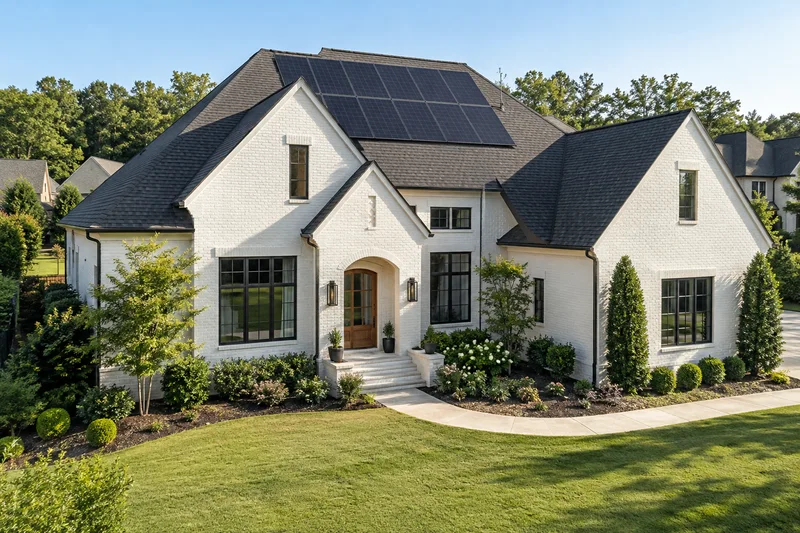 THE WHOLE HOME PICTURE
A THOUGHTFUL START
Before the panels, the plan.
Look at the home as a whole. These three questions help shape a useful assessment.
- Roof
- Condition, usable space and shade.
- Energy
- Annual usage and future needs.
- Priorities
- Bill savings, backup, or both.
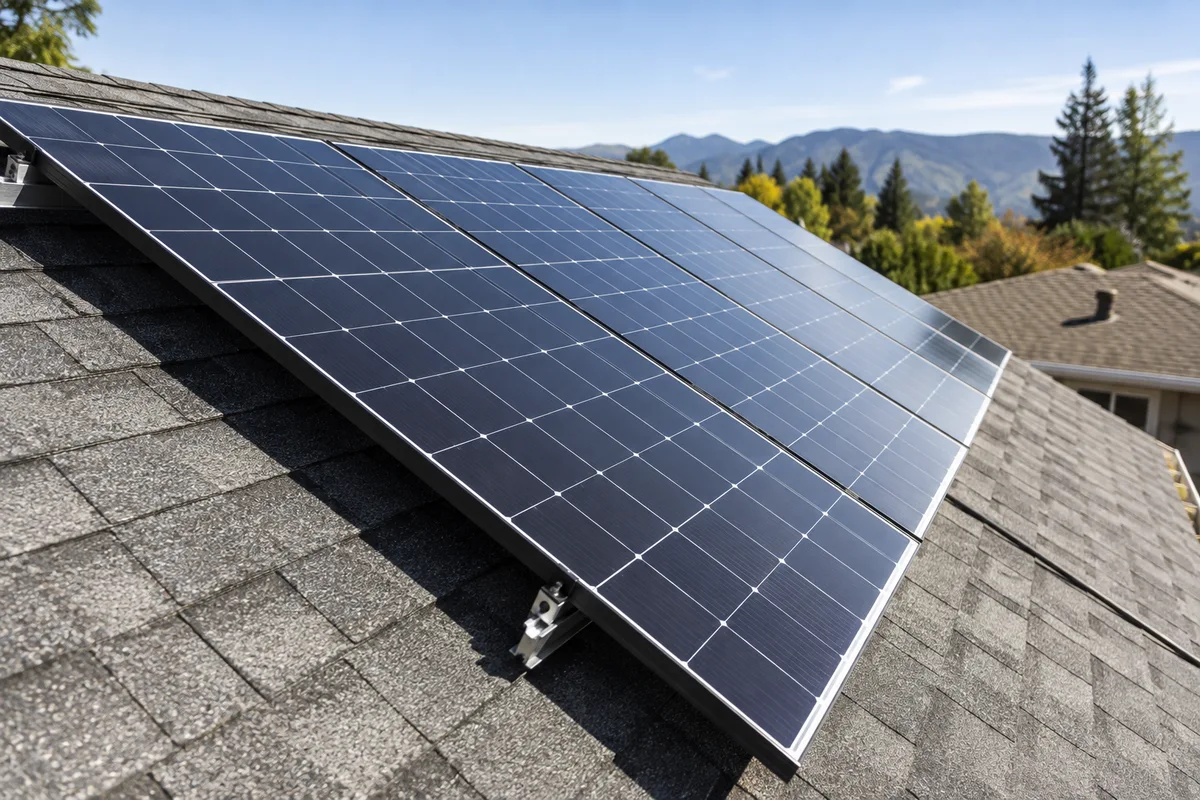
MORE THAN THE PANELS
Small details. A considered system.
The modules are the visible part. Mounting, electrical equipment and a clear handover matter too. Ask how the proposed parts work together and what support comes with them.
Explore the details.
Is your roof a good starting point?
Consider its condition, available space and shade. A home assessment should examine these together before an array is proposed. If roof work is approaching, discuss the sequence before installation.
What does your electricity use tell us?
A year of usage gives more context than a single seasonal bill. Think about changes ahead, such as an electric vehicle or a new heat pump, so the conversation reflects your plans.
How does the system fit together?
Panels generate electricity; an inverter makes it usable by the home. Monitoring helps you understand production. Battery storage is a separate design choice, not something every solar installation includes.
What should a proposal explain?
Look for the proposed equipment, estimated production assumptions, scope, exclusions and the responsibilities for approvals and support. Ask how your utility’s import rates and export credits affect the bill estimate.
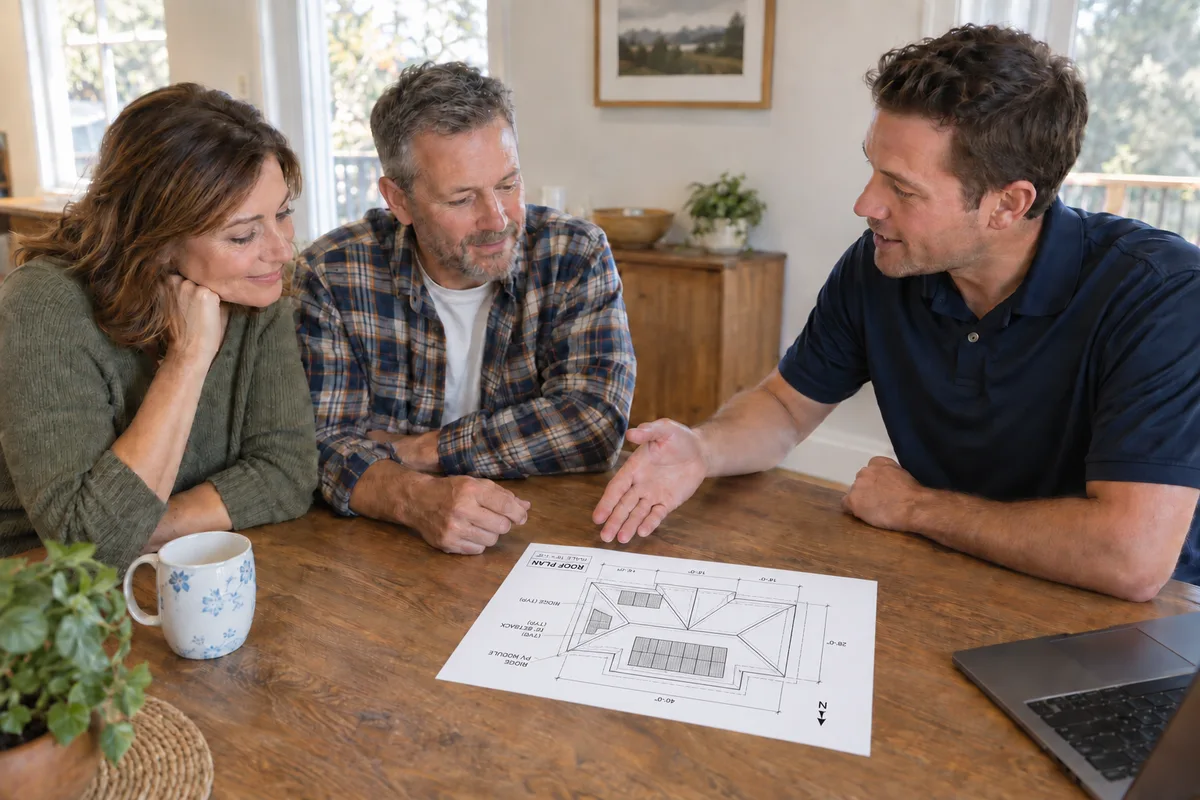
FROM POSSIBILITY TO PROPOSAL
See what your numbers are saying.
A year of electricity use helps explain your starting point. Pair it with a property-specific production estimate, then look at what you could use at home and what would be exported.
Explore the savings calculatorTHE PRACTICAL SIDE
A little preparation goes a long way.
A useful proposal answers more than how many panels will fit.
Roof work: what comes first?
Share the roof’s age, known leaks and any planned replacement. Ask how roof condition is assessed, who handles repairs and how future panel removal and reinstallation would be managed. Resolve roof concerns before committing to an installation schedule.
What should be included in the scope?
Request an equipment list, array layout, electrical-work scope and a clear list of exclusions. Ask whether panel upgrades, access equipment or other property-specific work could change the price. Keep responsibilities and approval steps in writing.
How should I compare proposals?
Compare the same system scope and annual production assumptions, not just panel count. Separate the installed price from financing terms, and compare the estimated remaining utility bill as well as proposed payments. Ask which assumptions are driving the savings.
What happens after installation?
Ask for the monitoring walkthrough, equipment documentation, warranty terms and support contacts. Clarify who investigates an alert and which work is covered. Installation completion and utility authorization to operate are separate milestones.
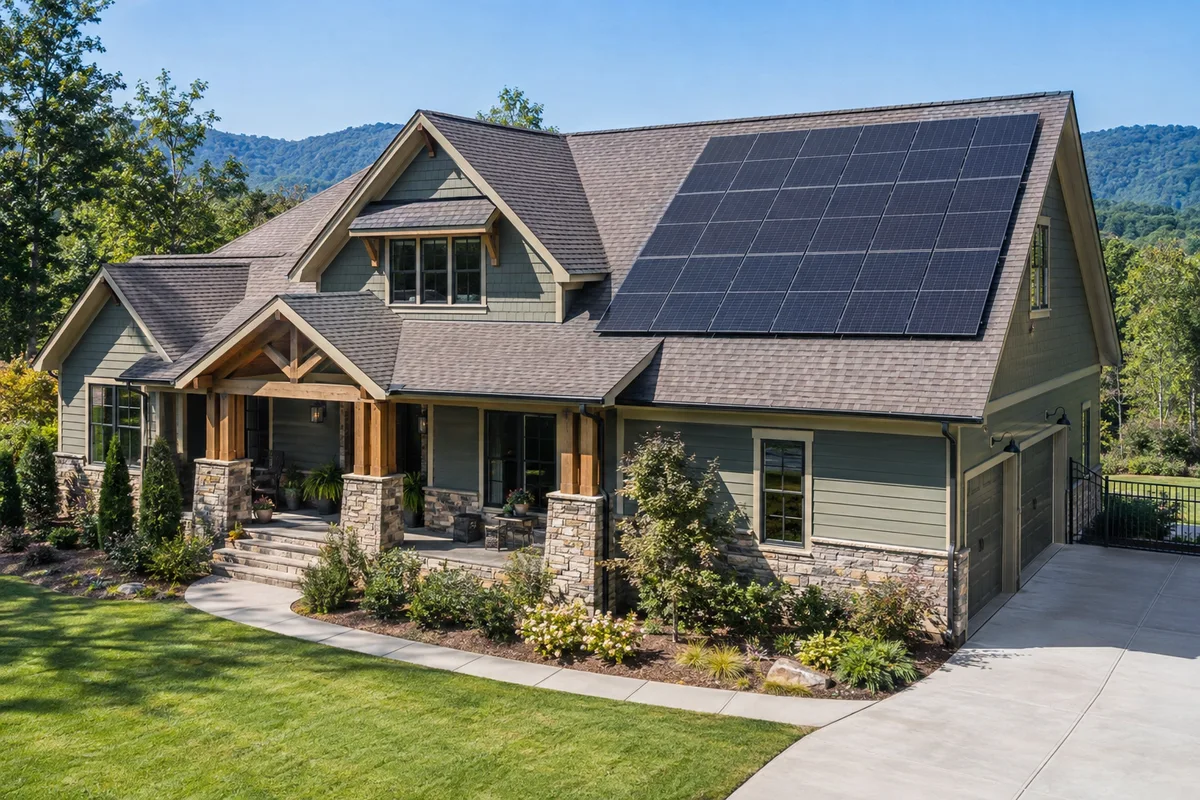
YOUR NEXT STEP
Start with the home you have.
Your roof age, electricity usage and future plans are useful starting points. You do not need every answer before getting in touch.
Start a conversation